Sustainability in dentistry is often framed around reducing disposables and energy consumption, but a deeper dimension lies in the design and lifespan of equipment. Dental equipment that is built to last can reduce waste, lower lifetime costs, and minimise the environmental burden of replacements.
By considering regulation, standards and repairability, practices can make purchasing choices that support both planet and practice. A-dec has long embedded these principles into its equipment design, ensuring durability, modularity and long-term performance. A recent example is the A-dec 500 Pro delivery system, which combines this established design philosophy with the reliability and digital innovation required for daily clinical use.
The case for durability
Modern dental practices are increasingly seeking ways to align with sustainability goals. However, a reliance on disposables and short-lived equipment often undermines these efforts. When equipment fails prematurely, it generates waste not only in the form of discarded units, but also in the environmental impact of manufacturing, shipping and installation of replacements.
By contrast, investing in equipment with a proven 15- to 20-year lifespan reduces material demand, lowers transport emissions, and supports financial stability for the practice. Durable systems also reduce downtime and disruption, allowing clinicians to focus on patient care rather than maintenance or replacement planning.
A-dec has long positioned durability at the heart of its design philosophy. For decades, the concept of conserving resources has been a guiding principle in The A-dec Way1 tenets, ensuring that products are engineered for longevity rather than obsolescence. That is why A-dec chairs and delivery systems are rigorously tested to withstand years of daily use and supported by a modular design that allows components to be repaired or upgraded rather than discarded.
Regulation and responsibility
Regulation is a key driver of sustainability in healthcare equipment. In the European Union, the Medical Device Regulation (MDR 2017/745) emphasises traceability, quality and safety across the entire lifecycle of a medical device.2 For dental equipment, this means manufacturers must demonstrate not only clinical performance but also material safety, labelling accuracy and post-market surveillance. Robust compliance reduces waste by ensuring products are fit for long-term use.
Since Brexit, the EU MDR no longer applies in Great Britain. Devices are regulated under the UK Medical Devices Regulations 2002 (as amended), overseen by the Medicines and Healthcare products Regulatory Agency (MHRA). However, the system remains in a transitional phase, and CE marking continues to be accepted until 30 June 2030 for most devices, while the new UKCA mark is being rolled out. It is also worth noting that in Northern Ireland, EU MDR continues to apply under the Protocol, so CE marking remains the requirement there.3
Alongside medical device regulation, the Registration, Evaluation, Authorisation and Restriction of Chemicals (REACH) regulation plays a crucial role in protecting both human health and the environment from hazardous substances.4 Dental equipment manufacturers must evaluate and limit the use of harmful chemicals in materials, ensuring compliance before products reach the market.
Together, these frameworks encourage manufacturers to adopt cleaner production processes, reduce chemical risks, and extend the safe lifecycle of equipment. This approach is already part of A-dec’s manufacturing philosophy, where sourcing, production and testing are closely managed in-house. Understanding these regulations helps dental professionals make informed, ethical purchasing decisions, and provides assurance that equipment is not only high-performing but also responsibly produced.
Repairability and modular design
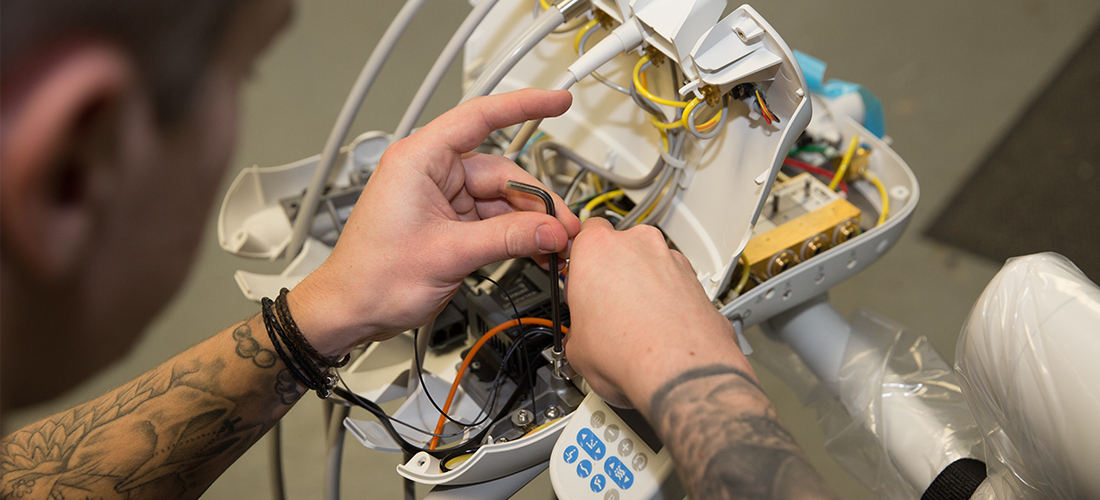
One of the most overlooked aspects of sustainable dentistry is repairability. When dental equipment is designed with modular components, parts can be replaced or upgraded without discarding the entire unit. This design philosophy significantly reduces waste, extends product lifespan, and lowers costs for the practice.
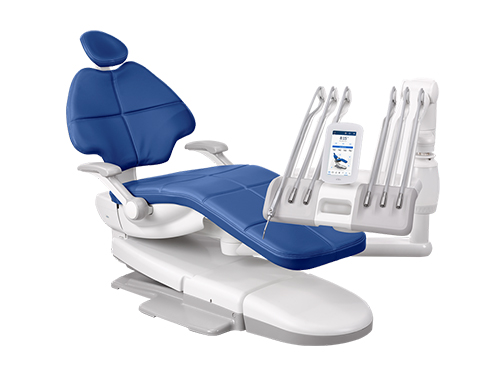
For example, the A-dec 500 Pro delivery system incorporates modular assemblies that allow for component-level servicing. This means that wear-and-tear items can be replaced independently, reducing both cost and environmental impact. By avoiding wholesale replacement, practices also minimise downtime, ensuring a smoother workflow and better patient experience.
Repairability also ties into resource efficiency within manufacturing. A-dec’s processes in Newberg, Oregon, are designed for end-to-end oversight, allowing quality to be controlled from raw material through to final assembly. When scrap cannot be avoided, metals and other materials are collected and recycled, while local sourcing of specialist components helps reduce transport emissions and support regional economies. These measures, combined with lean manufacturing and a culture of continuous improvement, drive the ongoing reduction of waste.
Warranties, lifespan and total cost
Sustainable dentistry is as much about economics as it is about ecology. Equipment that is designed to last reduces waste, minimises disruption and lowers the total cost of ownership over its lifetime.
With A-dec equipment, every component down to the smallest detail is built from high-quality raw materials to ensure robustness and longevity. This attention to detail underpins the durability of the system and gives practices confidence that their investment is designed for the long term.

A 10-year warranty, such as that offered on A-dec core equipment, adds additional reassurance for the clinician and further reflects design confidence and commitment to long-term support. When equipment is expected to deliver 20 years of service, the financial and environmental benefits are significant. Practices avoid the expense and waste associated with frequent replacements, while also benefiting from consistent performance and fewer disruptions.
Sustainability meets digital dentistry
For patients, durable equipment translates into a smoother clinical experience. Ergonomic stability, reliable controls and gentle chair movements all contribute to comfort and trust. From a sustainability perspective, this continuity reinforces the value of investing in quality, both ethically and operationally.
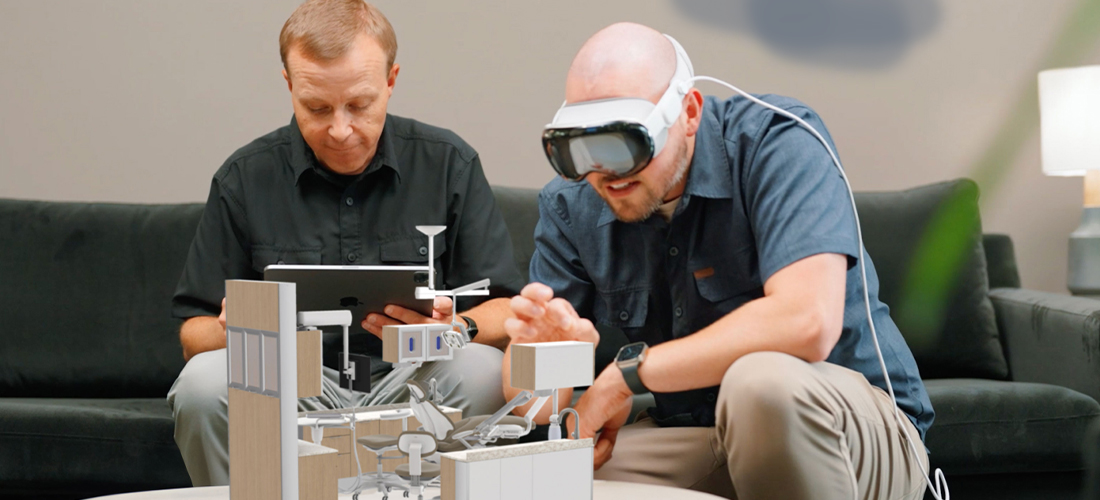
Sustainability and innovation are not mutually exclusive. In fact, digital integration can support responsible dentistry by reducing inefficiencies and extending equipment life. The A-dec 500 Pro demonstrates this by incorporating software-driven updates that keep the system current without requiring major hardware replacements.
Through A-dec+ connectivity, practices can access remote diagnostics, monitor performance, and receive real-time software enhancements. This reduces unnecessary service visits and ensures equipment remains future-ready without generating additional material waste. In essence, software innovation supports hardware longevity, which is a crucial consideration for sustainable practice management.
Practical steps for dental professionals
For dental teams looking to embed sustainability into their equipment decisions, several practical considerations can help guide purchasing:
- Evaluate warranties and expected lifespan – longer warranties are often linked to robust design and lower long-term costs
- Ask about modularity and repairability – systems that allow for part-level replacement significantly reduce waste
- Review compliance with REACH and the relevant medical device regulations (EU MDR in the EU, or MHRA requirements in Great Britain) – check that manufacturers can demonstrate conformity with these frameworks
- Consider sourcing and manufacturing practices – local or vertically integrated production often reflects stronger control of resources and reduced emissions
- Balance cost with value – initial outlay should be considered against 15 to 20 years of reliable use, not short-term savings.
By framing sustainability as a holistic consideration, encompassing materials, design, regulation and lifecycle performance, dental professionals can make purchasing choices that are both responsible and resilient.
Long-term ethical practice
Sustainability in dentistry extends far beyond disposables. By focusing on durability, repairability and regulatory compliance, practices can reduce environmental impact while ensuring financial stability and patient satisfaction. Equipment built to last, like the A-dec 500 Pro delivery system, exemplifies how sustainable design and digital innovation can work together to support long-term ethical practice.
For dental professionals, investing in longevity is not only good for the planet but also essential for future-ready patient care, and A-dec’s commitment to quality is evident at every level – right down to the smallest brass screw.
References:
1. The A-dec Way. Available at: pdf/The-A-dec-Way-Brochure-85605300qqod.pdf?rev=ca516a2aa9ca4859928b2ce3b770987b. Accessed 20 August 2025 2. VDE. The EU Medical Device Regulation (MDR): What is changing? Available at: https://www.vde.com/topics-en/health/consulting/the-eu-medical-device-regulation-mdr-what-changes. Accessed 20 August 2025 3. Gov.uk. Guidance: Regulating medical devices in the UK. Available at: https://www.gov.uk/guidance/regulating-medical-devices-in-the-uk. Accessed 21 August 2025 4. Health and Safety Executive (HSE). UK REACH explained. Available at: https://www.hse.gov.uk/reach/about.htm. Accessed 20 August 2025